Add Your Footsteps to the Via Domitia in Languedoc
By Traveller Direct
By Traveller Direct
Added Tue, Apr 24 2018
Hey, Thanks For Subscribing!
Please check for a confirmation message and ensure you add us to a safe email list.
If you don't see a message in the next five minutes, check your spam or junk folders and mark our emails safe for next time.
See you soon!
Duplicate Email Found!
Well this is embarrassing... It looks like is already registered.
We have just sent an email to that address with a link to manage the subscription with us. If you don't see a message in the next five minutes, check the spam or junk folders, it's definitely there.
See you soon!
A barge holiday in France is the perfect opportunity to trace the story and the route of the Via Domitia – the oldest road in France.
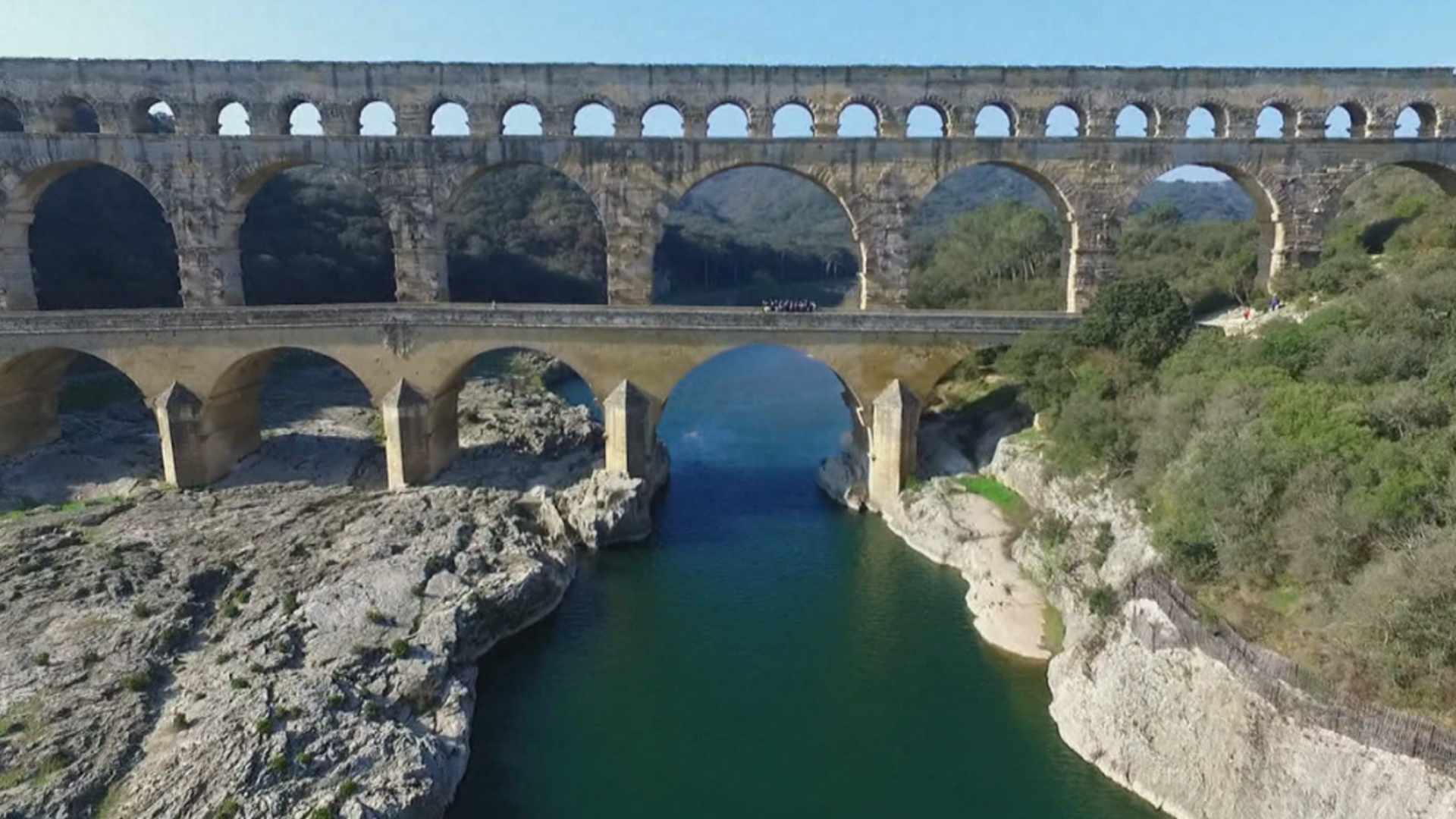
History lovers are in their element on a barge holiday in France. The country’s heritage stretches back for millennia; it’s fascinating to see traces of its ancient past glimpsed in a modern setting. The Roman occupation of Gaul left its mark across the country, nowhere more so than in the South of France; the Pont du Gard, the arena of Arles and the Maison Carrée in Nimes are all top attractions for history buffs on a barge holiday. In France there are few Roman construction projects that I find more interesting than the Via Domitia.
A Route Through Gaul
It is said that all roads lead to Rome – in the case of the Via Domitia, this is absolutely true. This road was built to link Rome with the Spanish city of Cadiz, cutting across modern Languedoc-Roussillon. Its construction in the second century BC represents the growing Roman power in Gaul, allowing easy access to the garrisons set up to control the colonies in Southern France.
The Via Domitia takes its name from Gnaeus Domitius Ahenobarbus, the proconsul of the first Roman colony in Gaul: Colonia Narbo Martius (modern day Narbonne). However, there are parts of the road that are much older than that christened by Domitius. It is said that Hercules used the route when returning to Greece after his tenth labour, and it is thought to be the road taken by Hannibal, his army and his elephants to reach the Pyrenees in the Second Punic War.
Roman Construction
It was through its infrastructure that Rome managed to spread its reach across so much of Europe; road building was an essential part of this. Quickly constructing straight, reliable and well-signposted roads was key to the empire’s military success. Multiple layers and sufficient drainage meant that the roads could readily withstand the traffic of army footfall and wagons full of supplies. Milestones allowed navigators to accurately record distances while they were travelling; every 17 miles along the Via Domitia, there was a rest stop with shelter, new horses, food and other vital supplies.
See it at Narbonne
Guests on a barge holiday in France can see the original paving stones of the Via Domitia when they moor up in Narbonne. Although there is not much evidence of its Roman heritage today, Narbonne was the capital of the ancient province. Just outside the Place de l'Hôtel de Ville (town hall) there is a small archaeological excavation that gives a window onto this important Roman road.
It is fascinating to see the exposed section; not only can you admire the original surface of the road, but the fact that it disappears under the modern pavement makes you realise that this amazing piece of Roman history runs unnoticed underneath miles of modern Languedoc.
If you’re planning a barge holiday in France
, I would highly recommend learning more about the influence of Roman colonisation by visiting some of the sites along the route of the Via Domitia.
Source: Free Articles from ArticlesFactory.com
Paul Newman is the Marketing and E-Systems Executive for European Waterways, the UK's most respected provider if you're looking for an all-inclusive, luxury barge holiday in France or other great destinations. Part of a team of experienced barging aficionados, Paul is first in line to endorse the perks of a slow-paced barge cruise to anyone looking for a unique holiday experience.
A barge holiday in France is the perfect opportunity to trace the story and the route of the Via Domitia – the oldest road in France.
History lovers are in their element on a barge holiday in France. The country’s heritage stretches back for millennia; it’s fascinating to see traces of its ancient past glimpsed in a modern setting. The Roman occupation of Gaul left its mark across the country, nowhere more so than in the South of France; the Pont du Gard, the arena of Arles and the Maison Carrée in Nimes are all top attractions for history buffs on a barge holiday. In France there are few Roman construction projects that I find more interesting than the Via Domitia.
A Route Through Gaul
It is said that all roads lead to Rome – in the case of the Via Domitia, this is absolutely true. This road was built to link Rome with the Spanish city of Cadiz, cutting across modern Languedoc-Roussillon. Its construction in the second century BC represents the growing Roman power in Gaul, allowing easy access to the garrisons set up to control the colonies in Southern France.
The Via Domitia takes its name from Gnaeus Domitius Ahenobarbus, the proconsul of the first Roman colony in Gaul: Colonia Narbo Martius (modern day Narbonne). However, there are parts of the road that are much older than that christened by Domitius. It is said that Hercules used the route when returning to Greece after his tenth labour, and it is thought to be the road taken by Hannibal, his army and his elephants to reach the Pyrenees in the Second Punic War.
Roman Construction
It was through its infrastructure that Rome managed to spread its reach across so much of Europe; road building was an essential part of this. Quickly constructing straight, reliable and well-signposted roads was key to the empire’s military success. Multiple layers and sufficient drainage meant that the roads could readily withstand the traffic of army footfall and wagons full of supplies. Milestones allowed navigators to accurately record distances while they were travelling; every 17 miles along the Via Domitia, there was a rest stop with shelter, new horses, food and other vital supplies.
See it at Narbonne
Guests on a barge holiday in France can see the original paving stones of the Via Domitia when they moor up in Narbonne. Although there is not much evidence of its Roman heritage today, Narbonne was the capital of the ancient province. Just outside the Place de l'Hôtel de Ville (town hall) there is a small archaeological excavation that gives a window onto this important Roman road.
It is fascinating to see the exposed section; not only can you admire the original surface of the road, but the fact that it disappears under the modern pavement makes you realise that this amazing piece of Roman history runs unnoticed underneath miles of modern Languedoc.
If you’re planning a barge holiday in France
, I would highly recommend learning more about the influence of Roman colonisation by visiting some of the sites along the route of the Via Domitia.
Source: Free Articles from ArticlesFactory.com
Paul Newman is the Marketing and E-Systems Executive for European Waterways, the UK's most respected provider if you're looking for an all-inclusive, luxury barge holiday in France or other great destinations. Part of a team of experienced barging aficionados, Paul is first in line to endorse the perks of a slow-paced barge cruise to anyone looking for a unique holiday experience.

Most Talked About Posts
Staff Picks
Now Trending
Our Newsletter
Duplicate Email Found!
Well this is embarrassing... It looks like is already registered.
We have just sent an email to that address with a link to manage the subscription with us. If you don't see a message in the next five minutes, check the spam or junk folders, it's definitely there.
See you soon!
Join Our Newsletter
Hey, Thanks For Subscribing!
Please check for a confirmation message and ensure you add us to a safe email list.
If you don't see a message in the next five minutes, check your spam or junk folders and mark our emails safe for next time.
See you soon!
Duplicate Email Found!
Well this is embarrassing... It looks like is already registered.
We have just sent an email to that address with a link to manage the subscription with us. If you don't see a message in the next five minutes, check the spam or junk folders, it's definitely there.
See you soon!